
Beyond Diagnostics: When the "Real Problem" is Efficiency (Understanding HVAC Ratings)
We’ve done all we can. In our last series, we dove deep into the data logging, the control board diagnostics, and the component testing referenced in image_26.png. Your current system is now running. But the fundamental question remains: Is it performing?
A diagnostically "healthy" old unit can still be a financial black hole.
It’s often hard for homeowners to differentiate a "Technical Master" installation from a generic "Parts Changer" box swap. The difference isn't just in how it looks; it's in the data. To understand the data, you have to cut through the industry acronyms.
When we talk about a 30% reduction in your utility bill, we are not guessing. We are using the math. Here are the three energy ratings that actually matter, explained.
1. SEER (Seasonal Energy Efficiency Ratio): The "Average MPG"
SEER is the most advertised number in residential HVAC. The mistake homeowners make is treating it as an absolute measurement of performance.
SEER is an average. It measures a system's cooling output divided by its total electric energy input, but it's measured over an entire cooling season. The lab tests use fluctuating outdoor temperatures (from 65°F to over 100°F) to simulate a "typical" season.
A 10 SEER unit, which is what many Geneva homeowners are currently running, uses much more electricity to create a specific amount of cooling than a 16 SEER unit.
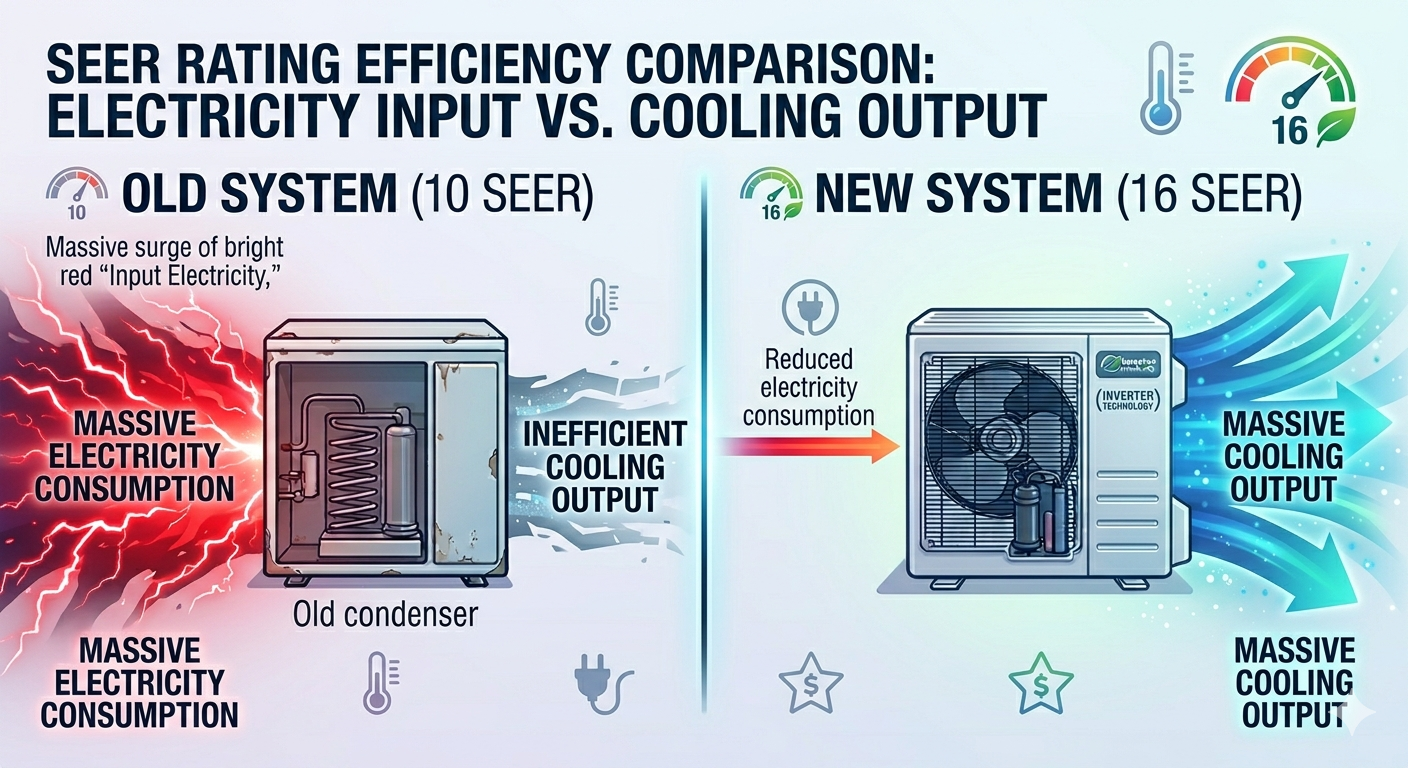
2. EER (Energy Efficiency Ratio): The "MPG at 100°F"
While SEER is the average, EER is the peak performance. This is the number you should care about most during a hot Alabama July.
EER measures a unit's efficiency under a static, intense load: specifically, an outdoor temperature of 95°F and an indoor temperature of 80°F (with specific humidity requirements).
If SEER is the "Average City/Highway MPG," EER is "The MPG when you are towing a trailer up a mountain at high noon." An old unit may have its diagnostics "Pass," but its EER might have dropped from 9 to 6 over the years due to coil corrosion and weak compression. It might keep you cool, but it is taking a beating and your checkbook along with it.